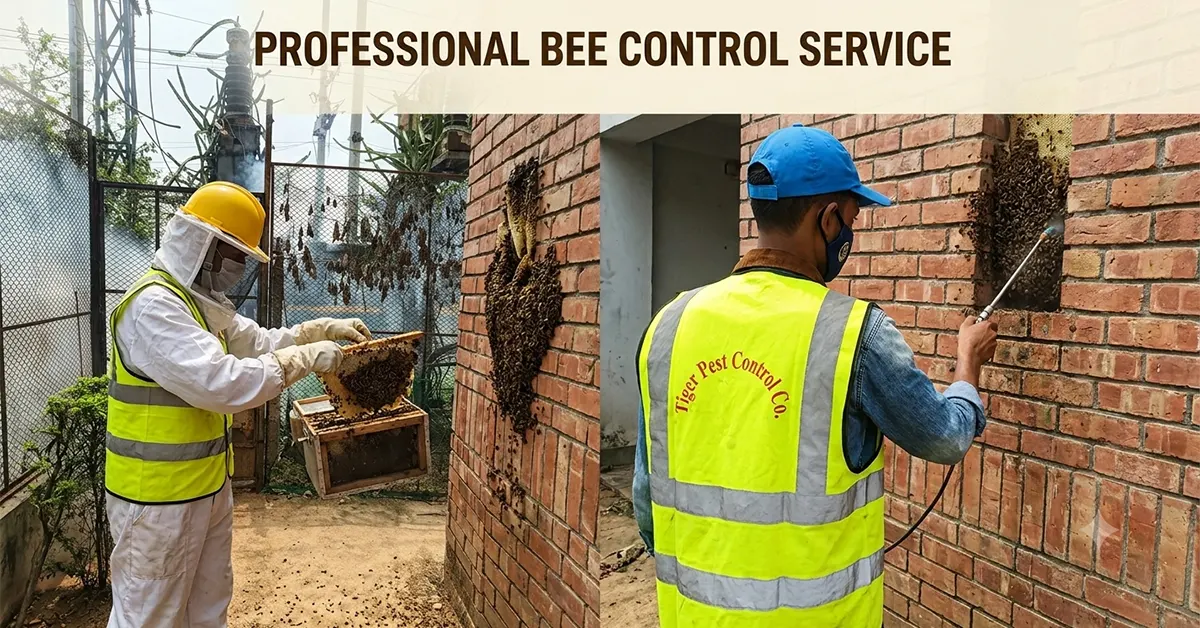
Bee Control
0 services available
Expert pest control services bee control in Bangladesh. Safe hive removal, humane relocation & prevention. Protect your home from bees, wasps & hornets.
Pest Control Services Bee Control Bangladesh
0 services available
No services found in this subcategory.
Why Bee Control Matters in Bangladesh
Bangladesh's geography and climate make it a natural hotspot for bee and wasp activity. The country's tropical monsoon climate, combined with extensive agricultural landscapes, provides abundant nectar sources and nesting sites. However, rapid urbanization has dramatically altered this balance. Dhaka's built-up area has expanded sevenfold in recent decades, while green space coverage has plummeted to just 2%. This habitat disruption forces bees and wasps to seek shelter in human structures—attics, wall cavities, roof eaves, and industrial warehouses.
The agricultural significance of bees in Bangladesh cannot be overstated. A 2024 study from Sylhet Agricultural University found that 73.3% of farmers in the Hakaluki haor region noticed declining native honey bee populations, with 50% attributing reduced mustard yields to inadequate pollination. Open pollination with artificial beehives significantly increased mustard yield per plant from 1.47g to 3.6g—a 145% improvement. This data underscores why indiscriminate bee destruction harms both ecosystems and livelihoods.
Yet the risks are equally real. Unmanaged hives in populated areas create liability issues for property owners. Schools, hospitals, restaurants, and garment factories face operational disruptions when bees establish colonies nearby. In Bangladesh's densely packed urban environments, a single disturbed hive can send hundreds of stinging insects into streets, markets, and residential compounds within minutes.
Professional pest control services and bee control providers navigate this delicate balance. They assess whether a colony can be safely relocated to agricultural zones or whether elimination is necessary for public safety. This nuanced approach distinguishes reputable companies from those that simply spray chemicals without ecological consideration.
Common Bee, Wasp & Hornet Species in Bangladesh
Understanding the species involved is critical for effective and safe bee control. Bangladesh hosts several stinging insects, each requiring different management strategies.
Honey Bees (Apis cerana & Apis mellifera)
The Asian honey bee (Apis cerana) is native to Bangladesh and the primary pollinator for crops like mustard, mango, and vegetables. The European honey bee (Apis mellifera) is also kept commercially by beekeepers. Honey bees are generally non-aggressive unless their hive is threatened. Because of their ecological and economic value, professional pest control services prioritize live relocation over destruction whenever possible.
Asian Giant Hornet (Vespa mandarinia)
The world's largest hornet species and one of the most dangerous. A single hornet can kill 40 honey bees per minute with its powerful mandibles, and a small group can destroy an entire honey bee colony of tens of thousands within hours. Their sting delivers potent neurotoxins that can cause organ failure and death in humans, particularly with multiple stings. These hornets build subterranean nests that are difficult to locate and extremely hazardous to approach without professional equipment.
Asian Hornet (Vespa velutina)
Native to Asia and occurring across India, Pakistan, and into eastern China, the Asian hornet is an invasive predator of honey bees that has spread internationally through trade shipments. In Bangladesh, they pose a growing threat to both managed and wild bee colonies.
Paper Wasps & Yellow Jackets
These social wasps build distinctive papery nests from chewed wood pulp and saliva, often under eaves, in wall cavities, or in trees. Unlike honey bees, wasps can sting multiple times without dying, making them particularly dangerous when nests are disturbed.