
Warehouse Pest Protection
Professional industrial pest control services in Bangladesh for factories, warehouses & manufacturing. Expert rodent, insect & bird control.
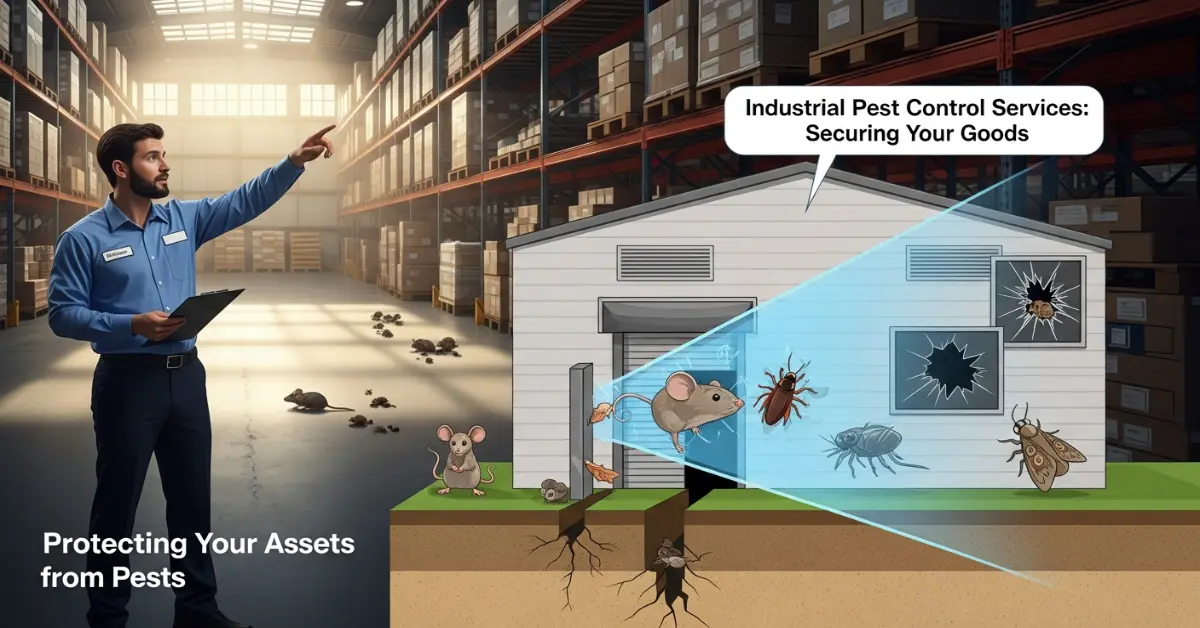
Industrial pest control services Bangladesh
Industrial pest infestations represent one of the most critical threats to manufacturing operations, warehouse integrity, and supply chain continuity in Bangladesh's rapidly expanding industrial sector. With over 4,000 registered RMG factories, thousands of pharmaceutical plants, food processing facilities, and massive warehousing complexes, professional industrial pest control services have become essential infrastructure for maintaining production schedules, ensuring regulatory compliance, and protecting export contracts worth billions of dollars. Unlike residential pest problems that inconvenience families, industrial infestations directly halt production lines, contaminate products, trigger regulatory shutdowns, and destroy carefully built business relationships with international buyers.
Warehouse pest management Bangladesh
The tropical monsoon climate of Bangladesh—characterized by 80% average humidity, temperatures between 25-35°C, and abundant rainfall—creates exceptionally favorable conditions for industrial pests year-round. Rodents, cockroaches, stored product insects, and pest birds thrive in the vast, complex environments of factories and warehouses, exploiting the numerous hiding spots, food sources, and entry points that large industrial facilities inevitably present. A single rodent sighting in a pharmaceutical clean room or cockroach evidence in a food processing line can result in immediate FDA warning letters, buyer audit failures, and contract cancellations that devastate business operations.
Industrial pest prevention Dhaka
Leading Bangladeshi providers including Scorpion Services, Quick Knock Pest Control, Paragon Pest Control BD, Zero Pest, and Defence Pest Control BD have developed specialized industrial pest control services combining Integrated Pest Management (IPM) protocols, advanced monitoring technologies, and compliance-focused documentation. These services address the unique challenges of industrial environments—24/7 operations, heavy machinery, raw material storage, and strict regulatory requirements—while ensuring minimal disruption to production schedules. With pricing structured for industrial budgets and comprehensive service warranties, professional pest management has become essential risk management for Bangladesh's manufacturing and logistics sectors.
The Business Impact of Industrial Pest Infestations
The consequences of pest problems in industrial settings extend far beyond the physical presence of pests. For Bangladesh's Ready-Made Garment (RMG) sector, which contributes over 80% of export earnings and employs millions, industrial pest control services are literally business survival tools. International buyers including H&M, Zara, Walmart, and Target conduct rigorous supplier audits under standards like HACCP, AIB, and BRC, where pest evidence results in immediate contract cancellations. A single failed audit can cost a factory millions in lost revenue and require 6-12 months of corrective action before buyer relationships can be restored.
Pharmaceutical and food processing facilities face equally severe consequences. FDA and WHO inspections of Bangladeshi pharmaceutical plants have issued warning letters and import bans due to pest activity, destroying export licenses worth hundreds of millions of dollars. Food processing facilities face product recalls, health department closures, and irreversible brand damage when pests contaminate production lines. The financial mathematics of professional industrial pest control services demonstrate clear return on investment: emergency remediation for severe infestations costs 500,000-2,000,000 BDT including production halts, deep cleaning, and reputation management, while comprehensive annual prevention programs averaging 100,000-500,000 BDT protect millions in revenue and regulatory licenses.
Warehouse and logistics operations face unique challenges where pests destroy inventory, compromise packaging integrity, and create liability risks. Rodents gnaw through electrical wiring creating fire hazards, while stored product insects infest grains, textiles, and raw materials rendering them unusable. Professional industrial pest control services provide the systematic monitoring, rapid response capabilities, and compliance documentation that protect inventory values and ensure uninterrupted supply chain operations.
Regulatory Compliance and Industrial Pest Management Standards
Bangladesh's industrial sector operates under increasingly stringent regulatory frameworks that mandate professional industrial pest control services as a condition of licensing and operation. The Bangladesh Food Safety Authority (BFSA) requires documented pest control programs for all food businesses. Export Processing Zones (EPZ) maintain their own pest control standards enforced through regular inspections, with non-compliance resulting in lease termination and operational shutdown. Pharmaceutical manufacturing follows WHO Good Manufacturing Practice (GMP) guidelines specifying integrated pest management with detailed record-keeping.
International buyer standards impose additional requirements. HACCP (Hazard Analysis Critical Control Points), BRC (British Retail Consortium), and ISO 22000 certifications mandate systematic pest prevention programs with comprehensive documentation. Failed audits due to pest activity result in immediate contract cancellations and blacklisting from supplier networks. Professional industrial pest control services navigate these requirements through detailed service reports, safety data sheets, pest sighting logs, corrective action reports, and annual compliance certifications that demonstrate due diligence and protect business continuity.
How to Order
Follow these simple steps to book your service quickly and easily.
Select Service
From the category, select the service you are looking for.
Book Your Schedule
Select your convenient time slot that fits your availability.
Place Order
Confirm your order by clicking “Place Order”.
Comprehensive Industrial Pest Control Service Methodologies
Professional industrial pest control services in Bangladesh employ systematic, multi-layered treatment protocols customized to facility type, operational requirements, and regulatory standards. The process initiates with comprehensive facility assessment using advanced inspection techniques—rodent monitoring devices with sensor technology, insect light traps, pheromone monitoring for stored product pests, and detailed structural analysis identifying entry points and harborage areas. Technicians map risk zones including loading docks, raw material storage, production lines, employee break areas, mechanical rooms, and waste disposal areas, prioritizing these for intensive monitoring and treatment.
Integrated Pest Management (IPM) forms the foundation of modern industrial pest control services, emphasizing prevention through exclusion, sanitation, and monitoring before chemical intervention. Physical exclusion includes sealing cracks and gaps with rodent-proof materials, installing door sweeps and air curtains at loading docks, applying weatherstripping, and implementing bird netting and spikes. Sanitation protocols address food debris, moisture control, and waste management that attract pests. Monitoring systems provide early detection, with electronic rodent sensors, insect light traps, and pheromone stations tracking activity trends and enabling rapid response before infestations establish.
Targeted chemical treatments supplement IPM when necessary, utilizing WHO-approved products applied by certified technicians. Rodent control employs tamper-resistant bait stations with slow-acting rodenticides, mechanical trapping, and tracking powder to monitor activity. Insect control utilizes gel baits, residual insecticides, and insect growth regulators (IGRs) for cockroaches; fumigation or heat treatment for severe stored product pest infestations; and species-specific pheromone traps for monitoring. Bird management includes non-toxic repellents, exclusion devices, and humane deterrents protecting facility exteriors.
Documentation and compliance support distinguish professional industrial pest control services from basic extermination. Detailed service reports record all treatment locations, products used, and application rates; safety data sheets accompany all chemicals; pest sighting logs track activity trends; and annual certifications support regulatory requirements. This documentation protects facilities during inspections, demonstrates due diligence for liability protection, and satisfies international buyer audit requirements.
Sector-Specific Industrial Pest Control Applications
Different industrial sectors in Bangladesh demand customized industrial pest control services protocols balancing efficacy with operational constraints. The RMG and textile industry, encompassing thousands of factories producing garments for export, requires pest management that protects fabric integrity while satisfying international buyer standards. Programs emphasize rodent control preventing damage to textiles and equipment, stored product pest management protecting fabric and trim inventories, and comprehensive documentation supporting buyer audits. Service scheduling accommodates production cycles, with treatments during shift changes or maintenance periods to prevent operational disruption. Annual programs for mid-size factories (500-2,000 workers) range 100,000-300,000 BDT, protecting millions in export revenue.
Pharmaceutical and healthcare manufacturing facilities require the most conservative industrial pest control services approaches, with zero-tolerance policies for chemical contamination. These environments utilize physical exclusion, electronic monitoring, and trapping exclusively, with chemical intervention restricted to pre-approved, low-toxicity products applied only in unoccupied areas. Service frequencies increase to weekly or bi-weekly to ensure immediate detection, with documentation meeting FDA, WHO, and international GMP standards. The investment in professional pest management (typically 200,000-500,000 BDT annually for mid-size facilities) represents essential protection against regulatory penalties and market access loss.
Food processing and beverage manufacturing industrial pest control services operate under strict food safety requirements with HACCP compliance mandatory. Programs emphasize non-chemical interventions—exclusion, sanitation, and monitoring—supplemented by limited, targeted treatments using food-safe formulations. Service occurs during production shutdowns with mandatory pre-startup safety inspections. Providers maintain detailed logs for health department and buyer review. Investment in professional control (150,000-400,000 BDT annually) protects against product recalls and brand damage.
Warehouse and logistics industrial pest control services address large-scale facilities with unique challenges including shipping docks, extensive storage racking, and high-value inventory. Treatment focuses on perimeter barrier applications, exterior baiting stations, dock door seals, and pheromone monitoring systems detecting incursions before population establishment. For export-oriented facilities, providers ensure treatments comply with destination country pesticide residue regulations, providing certificates required for customs clearance. Fumigation services for shipping containers and bulk storage utilize aluminum phosphide or sulfuryl fluoride under strict safety protocols.
Advanced Technologies and Industrial Pest Management
Modern industrial pest control services employ sophisticated technologies impossible for in-house maintenance teams to replicate. Electronic rodent monitoring systems with sensors detect activity in real-time, transmitting data to service providers for immediate response. These systems track rodent movement patterns, identify entry points, and enable targeted treatment before populations establish. Insect light traps with pheromone enhancement capture and monitor flying insect populations, while automated reporting systems generate compliance documentation.
Remote monitoring technologies allow industrial pest control services providers to track multiple facilities simultaneously, providing centralized oversight for national and multi-national companies operating in Bangladesh. Digital reporting systems generate real-time compliance documentation, trend analysis, and predictive alerts enabling proactive management. These technologies reduce service disruption while maximizing protection, aligning with Industry 4.0 smart manufacturing initiatives.
Fumigation and heat treatment technologies address severe infestations or regulatory requirements. Heat treatment raises facility temperatures to 60-70°C, achieving 100% mortality including eggs without chemical residues—ideal for organic-certified facilities or pharmaceutical clean rooms. Fumigation with sulfuryl fluoride or phosphine gas achieves complete elimination in 24-72 hours for shipping containers, warehouses, or entire facilities requiring rapid clearance.
Geographic Coverage and Regional Industrial Service Capabilities
Professional industrial pest control services have established comprehensive coverage across Bangladesh's major industrial zones, with service intensity matching manufacturing density and export facility concentration. Dhaka Division, encompassing the capital, Gazipur industrial belt, Narayanganj, and major EPZ facilities, contains the highest concentration of providers offering 24/7 emergency response for industrial clients. High-volume RMG factories in Gazipur, Savar, and Ashulia require specialized service teams familiar with textile manufacturing processes and buyer audit requirements.
Chittagong Division's port environment, with extensive warehousing and EPZ facilities, demands industrial pest control services utilizing heavy-duty materials resistant to salt corrosion and enhanced programs for shipping and receiving areas. The prevalence of stored product pests in port warehouses necessitates fumigation capabilities and quarantine protocols distinct from manufacturing-focused services.
Rajshahi and Khulna divisions have experienced rapid industrial pest control services growth as pharmaceutical manufacturing, food processing, and light industrial development accelerate. These services emphasize compliance documentation for FDA and international standards, with providers investing in specialized training and certification to support export-oriented facilities.
Sylhet and northeastern districts face unique industrial pest control services challenges due to developing industrial infrastructure and seasonal pilgrimage tourism supporting manufacturing of religious goods and hospitality supplies. Service providers emphasize cost-effective solutions for emerging industrial parks while maintaining compliance capabilities for export growth.