
Safe Rodent Removal
Professional safe rodent control service in Bangladesh. Family-friendly, eco-conscious rat & mouse removal using WHO-approved methods.
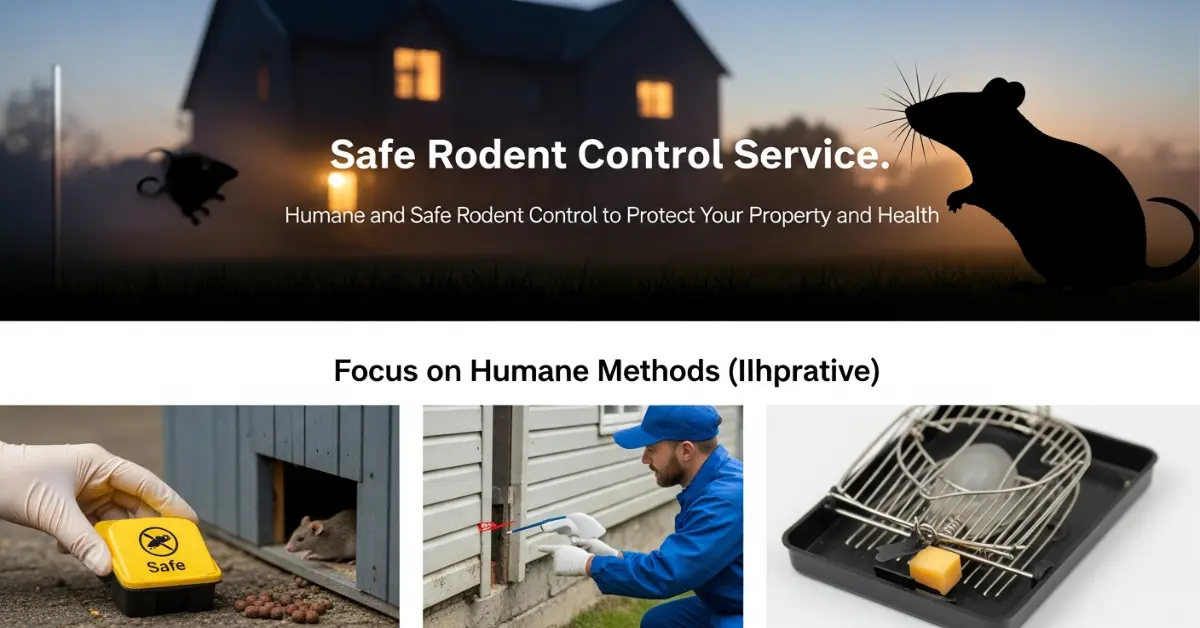
Safe rodent control service Bangladesh
Rodent infestations pose serious health and safety risks to Bangladeshi families, yet many homeowners hesitate to seek professional help due to concerns about chemical exposure, pet safety, and environmental impact. The traditional approach of using toxic baits and sprays—while effective at killing rats and mice—often creates secondary hazards for children who might contact contaminated surfaces, pets who could consume poisoned rodents, and ecosystems affected by bioaccumulating rodenticides. In response to growing demand for responsible pest management, professional safe rodent control service providers in Bangladesh have pioneered family-friendly, eco-conscious approaches that eliminate rodent populations without compromising human health, pet wellbeing, or environmental integrity.
Organic rodent control Dhaka
The tropical urban environment of Bangladesh—characterized by dense populations, abundant food sources, and favorable breeding conditions—supports significant rodent populations that resist conventional control methods. Dhaka alone faces severe rat pressure, with infestations affecting residential areas, restaurants, and commercial facilities throughout the capital. Professional safe rodent control service providers including City International Pest Control, Scorpion Services, and Paragon Pest Control BD have developed sophisticated integrated pest management (IPM) programs combining humane trapping, precision exclusion techniques, and WHO-approved low-toxicity treatments that achieve complete elimination while maintaining the highest safety standards.
Child-friendly rodent control
These safe rodent control service approaches prove particularly essential for households with infants, elderly family members, or immunocompromised individuals who are most vulnerable to both rodent-borne diseases and chemical pesticide exposure. For pet owners, non-toxic methods eliminate the risk of secondary poisoning that occurs when cats or dogs consume rodents killed by conventional anticoagulant baits. With pricing starting from just 3,000-6,000 BDT for residential safe control programs, professional eco-friendly rodent management has become accessible to Bangladeshi families seeking effective protection without safety compromises. Leading providers offer guarantees comparable to conventional chemical treatments, demonstrating that safety and efficacy can coexist in modern pest management.
The Science of Safe and Eco-Friendly Rodent Control
Effective safe rodent control service relies on comprehensive understanding of rodent biology and behavior to achieve elimination without hazardous chemical dependence. The foundation of safe control lies in Integrated Pest Management (IPM), a systematic approach endorsed by the World Health Organization that prioritizes prevention, monitoring, and non-chemical interventions before considering low-toxicity treatments. Professional technicians conduct thorough property assessments identifying rodent entry points (mice squeeze through 6mm gaps, rats through 12mm), food sources, water access, and harborage areas that support populations.
Humane trapping and removal form the core of safe rodent control service methodologies. Unlike conventional snap traps that may cause prolonged suffering or glue boards that create inhumane entrapment, modern services utilize electronic traps delivering instantaneous humane death, live-capture systems for relocation when appropriate, and multi-catch devices that minimize handling risks. These methods eliminate target rodents without environmental contamination, allowing immediate family re-entry and eliminating concerns about pet exposure to toxic carcasses.
Exclusion techniques provide permanent protection that chemical treatments cannot match. Professional safe rodent control service technicians seal entry points using rodent-proof materials including copper mesh (Flexi Armour), steel wool, concrete, and specialized sealants resistant to gnawing. Door sweeps, vent covers, chimney caps, and weatherstripping create physical barriers preventing reinfestation. This approach proves particularly valuable in Bangladesh's dense urban environments where neighboring properties may harbor reservoir populations—exclusion protects treated homes regardless of surrounding rodent pressure.
Why Conventional Rodent Control Creates Safety Hazards
Traditional rodent control methods pose documented risks that safe rodent control service providers specifically address. Anticoagulant rodenticides (warfarin, bromadiolone, difenacoum) require multiple feedings to kill, allowing poisoned rodents to wander for days before death, spreading contamination through droppings and creating carcass hazards in inaccessible wall voids. Secondary poisoning affects predators including cats, dogs, birds of prey, and snakes that consume contaminated rodents, creating ecological disruption and pet mortality risks. Children under six face particular danger from bait station exposure, with thousands of poisoning incidents reported annually from conventional rodent control products.
The "dead zone" phenomenon of conventional control actually exacerbates rodent problems. Killing rodents without exclusion creates vacant territories that attract new immigrants, perpetuating infestation cycles while generating continuous chemical exposure risks. Professional safe rodent control service eliminates this cycle through habitat modification—removing food attractants, sealing entry points, and altering environments to be inhospitable to rodent colonization. This preventive approach achieves long-term results without the repeated chemical applications that accumulate environmental and health risks.
For Bangladesh's growing organic food industry, pharmaceutical manufacturers, and export-oriented facilities, safe rodent control service provides compliance documentation meeting international standards including HACCP, BRC, and organic certification requirements. These sectors face zero-tolerance policies for chemical contamination, making non-toxic rodent management essential for market access rather than merely preferable.
How to Order
Follow these simple steps to book your service quickly and easily.
Select Service
From the category, select the service you are looking for.
Book Your Schedule
Select your convenient time slot that fits your availability.
Place Order
Confirm your order by clicking “Place Order”.
Comprehensive Safe Rodent Control Service Methodologies
Professional safe rodent control service providers in Bangladesh employ multi-layered treatment protocols that prioritize safety at every stage. The process initiates with comprehensive inspection using non-invasive techniques to identify active infestations, entry points, and conducive conditions. Technicians distinguish between Norway rats (burrowing, basement-dwelling), roof rats (climbing, attic-infesting), and house mice (small, ubiquitous), adjusting safe control strategies accordingly. Detailed reports document findings with photographs and prioritize recommendations by safety impact and efficacy.
Humane trapping systems form the primary population reduction method in safe rodent control service programs. Electronic traps deliver instantaneous lethal shock, eliminating suffering while providing kill confirmation for monitoring purposes. Live-capture cage traps allow relocation of captured rodents to appropriate wild areas when local regulations permit, though this approach requires careful implementation to prevent environmental disruption. Multi-catch devices capture multiple rodents without reset, reducing technician handling and service disruption. All trapping systems utilize secure, tamper-resistant designs preventing access by children and non-target animals.
Exclusion work provides permanent protection through physical barriers. Professional safe rodent control service technicians install door sweeps on all exterior doors, seal gaps around plumbing and electrical penetrations using copper mesh and food-safe sealants, repair damaged vent screens with metal hardware cloth, and install chimney caps and vent covers. For commercial facilities, loading dock seals, air curtains, and specialized rodent-proof fencing create comprehensive perimeter defense. Leading providers like City International Pest Control guarantee exclusion work for 12 months, returning to address any seal failures at no additional cost.
Environmental modification consultations complete safe rodent control service programs, addressing root causes of infestation without chemical dependence. Technicians recommend proper food storage in glass or metal containers, immediate spill cleanup protocols, garbage management with tight-fitting lids, clutter reduction eliminating nesting sites, and moisture control fixing leaks that provide water sources. Vegetation management including trimming tree branches away from rooflines and maintaining clear zones around foundations reduces exterior harborage and access bridges. These cultural practices, combined with physical exclusion, create inhospitable environments that prevent rodent colonization more effectively than chemical dependence.
Family-Specific Safe Rodent Control Applications
Different household compositions in Bangladesh demand customized safe rodent control service approaches prioritizing specific vulnerability concerns. Homes with infants and young children require particular attention to floor-level hazards—technicians utilize elevated bait stations, wall-void treatments inaccessible to crawling toddlers, and trapping systems with secure enclosures. Pre-service consultations identify play areas, nurseries, and child-accessible spaces requiring special protection protocols. Treatment scheduling accommodates nap times and family routines, with many providers offering evening and weekend service to minimize disruption.
Pet-owning households benefit from safe rodent control service methods that eliminate secondary poisoning risks. Non-toxic trapping systems prevent pet exposure to rodenticides through contaminated carcasses. Botanical repellents using peppermint oil, cayenne pepper, and predator urine create deterrent barriers safe for dogs and cats. Exclusion techniques protect pet food storage areas and feeding stations from rodent access. Technicians specifically assess pet behavior and access patterns, designing control programs that protect companion animals while eliminating target rodents.
Elderly and immunocompromised family members require safe rodent control service approaches that minimize stress and health risks. Low-odor formulations prevent respiratory irritation common in sensitive populations. Non-chemical methods eliminate medication interaction concerns. Service providers coordinate with family caregivers to schedule treatments during optimal health periods and provide clear communication about safety protocols. Post-treatment documentation supports healthcare provider consultations when patients have complex medical conditions.
Eco-Conscious Commercial Safe Rodent Control
Commercial safe rodent control service for restaurants, food processing facilities, and pharmaceutical manufacturers operates under the strictest regulatory requirements with zero-tolerance policies for chemical contamination. These programs emphasize non-chemical interventions—exclusion, sanitation, and monitoring—supplemented by limited, targeted trapping in non-food areas. Service scheduling accommodates operational hours, with treatments during closing periods and mandatory pre-opening inspections to ensure no contamination risks. Providers maintain detailed logs of trap locations, inspection dates, and corrective actions for health department and international audit review.
Organic-certified facilities require safe rodent control service utilizing OMRI-listed (Organic Materials Review Institute) methods including mechanical trapping, exclusion, and biological controls. These programs achieve regulatory compliance without synthetic chemical use, maintaining certification status essential for premium market access. Documentation includes product labels, application records, and compliance certificates required for organic inspector review.
Healthcare facilities including hospitals and clinics demand the most conservative safe rodent control service approaches. These environments utilize electronic monitoring systems, physical trapping, and exclusion exclusively, with chemical intervention restricted to emergency situations using pre-approved low-toxicity products. Service frequencies increase to bi-weekly or monthly to ensure immediate detection of any activity that could compromise sterile environments or patient safety. Specialized training for healthcare technicians includes infection control protocols and patient privacy awareness distinct from standard commercial service requirements.
Geographic Availability and Regional Safe Service Capabilities
Professional safe rodent control service has established comprehensive coverage across Bangladesh's major urban centers, with service intensity matching population density and rodent pressure. Dhaka Division, encompassing the capital, Gazipur, and Narayanganj, contains the highest concentration of providers offering same-day emergency response using non-toxic methods. High-rise residential towers in Gulshan, Banani, and Baridhara require specialized vertical safe control strategies addressing shared infrastructure that facilitates rodent movement between units.
Chittagong Division's coastal environment, with port facilities and extensive warehousing, demands safe rodent control service utilizing corrosion-resistant exclusion materials and enhanced programs for shipping areas. The prevalence of Norway rats in port sewers necessitates specialized exterior monitoring and trapping distinct from interior-focused house mouse management used in residential areas.
Rajshahi and Khulna divisions have experienced rapid safe rodent control service growth as urbanization accelerates and health consciousness increases. These services emphasize cost-effective safe solutions for emerging middle-class neighborhoods, with providers offering flexible payment plans and package deals combining rodent control with general pest management.
Sylhet and northeastern districts face unique safe rodent control service challenges due to heavy monsoon rainfall that compromises exclusion barriers and drives outdoor rodent populations into structures. Service providers emphasize structural modifications—improving drainage, elevating foundations, installing physical barriers—that provide protection independent of weather conditions. The region's growing tourism industry has increased demand for discrete, effective safe rodent management in hotels and guest facilities serving international visitors with environmental expectations.
Rural safe rodent control service focuses on agricultural protection using non-toxic methods that preserve beneficial predator populations. Live trapping and relocation, barn owl box installation, and habitat modification protect stored crops without the ecological disruption of conventional rodenticides. These programs integrate with rural development initiatives, providing safe alternatives to dangerous traditional poisons.