
Rodent Extermination Services
Professional rodent extermination control services in Bangladesh. Expert rat & mouse elimination, removal & prevention for homes & businesses.
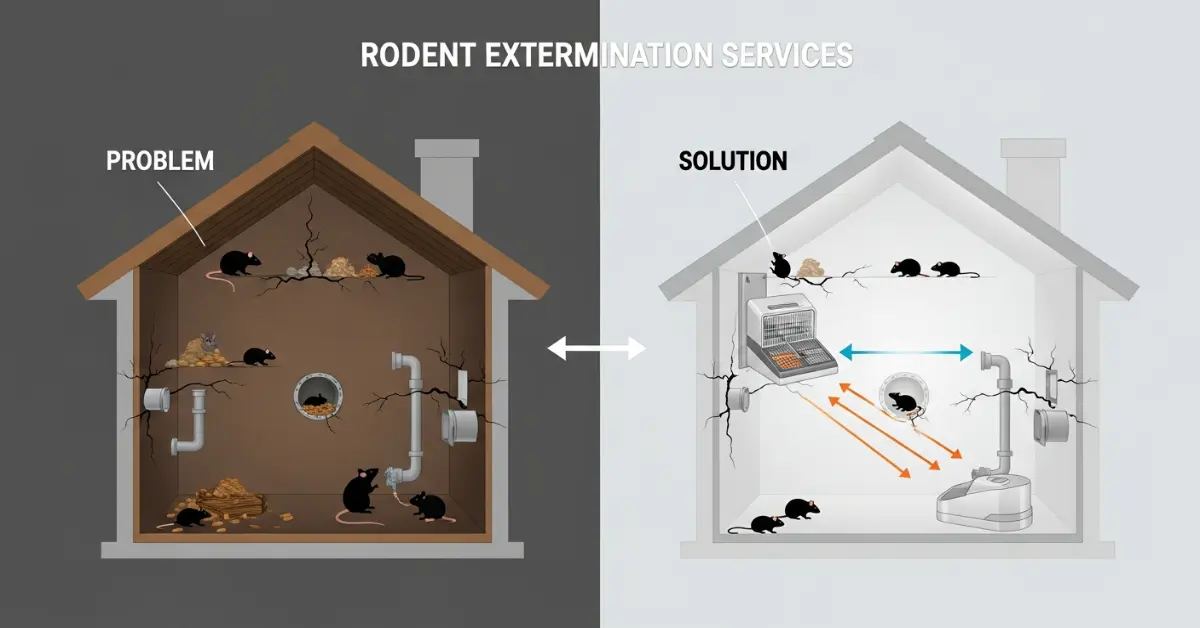
Rodent extermination control services Bangladesh
Rodent infestations have reached epidemic proportions across Bangladesh, with rats and mice causing billions of taka in property damage, food contamination, and public health risks annually. In the dense urban environments of Dhaka, Chittagong, and major cities—where over 21 million residents provide shelter, food, and water sources—professional rodent extermination control services have become essential infrastructure for protecting public health, preserving property values, and maintaining business operations. Unlike temporary DIY solutions that merely repel visible rodents, professional extermination services provide comprehensive elimination that addresses hidden nests, breeding populations, and the structural vulnerabilities that allow reinfestation.
Rodent removal service Bangladesh
The health implications of rodent activity extend far beyond mere nuisance. Rats and mice are documented vectors for over 35 diseases including leptospirosis, hantavirus, Salmonellosis, rat-bite fever, and plague, spreading pathogens through contaminated food, droppings, urine, and bites. Their constant gnawing behavior damages electrical wiring (creating fire hazards), compromises structural integrity, destroys insulation, and contaminates food stores. For Bangladesh's food service industry, pharmaceutical manufacturers, and export-oriented businesses, rodent evidence during inspections triggers immediate regulatory action, contract cancellations, and reputational damage that can destroy carefully built enterprises.
Rodent pest control extermination
Leading Bangladeshi providers including Urban Pest Control, Scorpion Services, Paragon Pest Control, SM Pest Control, and Quick Knock Pest Control have developed sophisticated rodent extermination control services combining professional inspection, systematic trapping and baiting, precision exclusion techniques, and advanced monitoring systems. These services utilize WHO-approved rodenticides, tamper-resistant bait stations, electronic traps, and humane removal methods that eliminate populations while preventing reinfestation. With pricing starting from just 3,000-6,000 BDT for residential extermination and 5,000-20,000 BDT for commercial programs, professional rodent elimination has become accessible to Bangladeshi families and businesses seeking to safeguard their health, property, and livelihoods against these persistent invaders.
The Science of Professional Rodent Extermination
Effective rodent extermination control services operate on principles of Integrated Pest Management (IPM), combining immediate elimination with long-term prevention. The foundation of professional extermination lies in understanding rodent biology—specifically that mice can squeeze through openings as small as 6mm (dime-sized holes), while rats require only 12mm (quarter-sized gaps). A single female rat produces up to 60 offspring annually, meaning populations rebound rapidly without comprehensive elimination. Professional technicians conduct thorough property assessments using specialized equipment to identify active infestations, entry points, harborage areas, and conducive conditions that support populations.
The extermination process begins with species identification—distinguishing between Norway rats (burrowing, basement-dwelling), roof rats (climbing, attic-infesting), and house mice (small, ubiquitous)—as each requires tailored elimination strategies. Rodent extermination control services employ multiple methods simultaneously: trapping systems (snap traps, electronic traps, glue boards, live cages) for immediate population reduction; baiting programs using slow-acting rodenticides (bromadiolone, difenacoum, zinc phosphide) that allow poisoned rodents to return to nests before death, achieving colony-wide elimination; and exclusion techniques that seal entry points to prevent reinfestation. This multi-layered approach ensures complete elimination rather than temporary suppression.
Advanced rodent extermination control services incorporate monitoring and documentation essential for regulatory compliance. Electronic monitoring systems with sensors detect rodent activity in real-time, while traditional inspection of bait stations and traps tracks elimination progress. Detailed service reports document treatment locations, products used, and safety protocols, supporting health department inspections and international audits for export-oriented businesses.
Why DIY Rodent Control Fails and Professional Extermination Succeeds
Bangladeshi consumers spend millions annually on retail traps, poisons, and repellents, yet rodent populations persist and expand. DIY methods fail for fundamental reasons: consumer-grade traps capture only visible individuals while missing the 80% of populations hidden in wall voids and burrows; over-the-counter baits use inferior formulations that rodents avoid or that kill too quickly, preventing toxin spread to colony members; and without professional exclusion, new rodents immediately immigrate to fill vacant territories, perpetuating infestation cycles.
Professional rodent extermination control services overcome these limitations through systematic approaches impossible for consumers to replicate. Commercial-grade bait stations containing palatable, slow-acting rodenticides achieve complete colony elimination by allowing foragers to distribute toxins throughout nests before dying. Precision trapping systems placed along rodent runways maximize capture efficiency. Comprehensive exclusion using rodent-proof materials (copper mesh, steel wool, concrete) creates permanent barriers. The documentation and accountability of professional services—service warranties, follow-up inspections, and regulatory compliance support—provide value beyond immediate elimination.
For commercial facilities, the cost of professional rodent extermination control services represents essential risk management. Emergency rodent extermination for severe infestations costs 15,000-50,000 BDT including damage repairs, while monthly prevention contracts averaging 5,000-15,000 BDT provide continuous protection. Failed health inspections due to rodent activity result in immediate closure, fines, and reputational damage far exceeding professional service costs.
How to Order
Follow these simple steps to book your service quickly and easily.
Select Service
From the category, select the service you are looking for.
Book Your Schedule
Select your convenient time slot that fits your availability.
Place Order
Confirm your order by clicking “Place Order”.
Comprehensive Rodent Extermination Control Service Components
Professional rodent extermination control services in Bangladesh deliver multi-phase elimination programs tailored to infestation severity, species, and property type. The process initiates with thorough inspection using specialized equipment including flashlights, mirrors, borescope cameras, and sometimes thermal imaging to identify active infestations, entry points, harborage areas, and droppings. Technicians distinguish between Norway rats, roof rats, and house mice, adjusting elimination strategies accordingly. Detailed reports document findings with photographs and prioritize treatment areas.
Immediate population reduction employs multiple trapping systems selected based on location sensitivity and client preferences. Snap traps provide instantaneous killing for visible rodents; electronic traps deliver humane lethal shocks with kill confirmation; glue boards capture multiple mice (though require careful placement away from pets and children); and live cage traps allow relocation when regulations permit. For severe infestations, rodent extermination control services may deploy dozens of traps simultaneously, checking and resetting daily until captures cease.
Baiting programs form the core of colony elimination in professional rodent extermination control services. Tamper-resistant bait stations containing slow-acting anticoagulant rodenticides (bromadiolone, difenacoum) or acute toxins (zinc phosphide, aluminum phosphide) are strategically placed along rodent runways, near burrows, and in hidden voids. These formulations allow rodents 3-7 days to return to nests and share toxins through grooming and cannibalism, achieving elimination of entire colonies including juveniles and breeding adults. Technicians rotate bait types to prevent resistance development and ensure continuous feeding.
Exclusion work provides permanent protection complementing chemical elimination. Professional rodent extermination control services seal cracks and crevices around foundations, doors, windows, and utility openings using rodent-proof materials. Door sweeps and weatherstripping eliminate ground-level entry; vent covers and chimney caps block aerial access. This physical modification prevents reinfestation from surrounding populations, which is critical in Bangladesh's dense urban environments.
Sanitation and habitat modification consultations complete comprehensive rodent extermination control services. Technicians recommend proper food storage in rodent-proof containers, immediate spill cleanup, garbage management with tight-fitting lids, clutter reduction eliminating nesting sites, and moisture control fixing leaks that provide water sources. Vegetation management including trimming tree branches away from rooflines reduces exterior harborage and access bridges.
Sector-Specific Rodent Extermination Applications
Different environments demand customized rodent extermination control services protocols. Residential services prioritize family and pet safety, utilizing enclosed bait stations, snap traps in secured locations, and exclusion materials that don't compromise home aesthetics. Treatment scheduling accommodates household routines, with technicians working during business hours while residents are away. Costs range 3,000-10,000 BDT for initial extermination, with annual contracts at 8,000-15,000 BDT providing continuous protection.
Food service and restaurant rodent extermination control services operate under zero-tolerance regulatory requirements. These programs emphasize immediate elimination through intensive trapping and baiting, followed by exclusion and monitoring to prevent reinfestation. Service scheduling accommodates operational hours, with treatments during closing periods and mandatory pre-opening inspections. Providers maintain detailed logs for health department review. Investment in professional extermination (15,000-35,000 BDT annually) protects against catastrophic costs of health department closures.
Healthcare facilities including hospitals and clinics require the most conservative rodent extermination control services approaches. These environments utilize physical trapping and exclusion exclusively, with chemical intervention restricted to emergency situations using pre-approved low-toxicity products. Service frequencies increase to bi-weekly or monthly to ensure immediate detection of any activity that could compromise sterile environments.
Industrial and warehouse rodent extermination control services address large-scale facilities with unique challenges including shipping docks, extensive storage racking, and multiple buildings. Treatment focuses on intensive baiting programs, exterior perimeter barriers, and monitoring systems. For export-oriented facilities, providers ensure treatments comply with international pesticide residue regulations, providing certificates required for customs clearance. Fumigation services for shipping containers utilize aluminum phosphide under strict safety protocols.
Advanced Extermination Technologies and Methods
Modern rodent extermination control services employ sophisticated technologies for enhanced efficacy. Electronic monitoring systems with sensors detect rodent activity in real-time, transmitting alerts to service providers for immediate response. Thermal imaging cameras identify heat signatures indicating nest locations within walls. Acoustic detectors locate rodent movement and gnawing sounds, pinpointing hidden infestations.
Chemical formulations have evolved significantly in professional rodent extermination control services. Second-generation anticoagulants (bromadiolone, difenacoum, brodifacoum) require single feeding for lethality, improving colony elimination compared to older multi-feed requirements. Non-anticoagulant options including zinc phosphide and cholecalciferol provide alternative modes of action for resistant populations. Fumigants like aluminum phosphide and sulfuryl fluoride achieve 100% mortality in enclosed spaces, including eggs and juveniles, for severe infestations.
Humane and eco-conscious options address growing demand for ethical pest management. Live trapping and relocation programs capture rodents without killing, though require appropriate release sites and regulatory compliance. Botanical repellents using peppermint oil, cayenne pepper, and predator urine create deterrent barriers. These methods, while sometimes less immediately effective than chemical extermination, satisfy environmental and ethical requirements for sensitive clients.
Geographic Coverage and Regional Service Capabilities
Professional rodent extermination control services have established comprehensive coverage across Bangladesh's eight administrative divisions. Dhaka Division, encompassing the capital, Gazipur, Narayanganj, and Savar, contains the highest concentration of providers offering same-day emergency response. High-rise residential and commercial towers in Gulshan, Banani, Baridhara, and Uttara require specialized vertical extermination strategies addressing shared infrastructure.
Chittagong Division's coastal environment, with port facilities and extensive warehousing, demands rodent extermination control services utilizing heavy-duty materials resistant to salt corrosion. The prevalence of Norway rats in port sewers necessitates specialized exterior baiting and monitoring distinct from interior-focused house mouse management.
Rajshahi and Khulna divisions have experienced rapid rodent extermination control services growth as urbanization accelerates. These services emphasize stored product protection for grain warehouses and food processing facilities, with extermination protocols designed to prevent contamination of commodities destined for domestic consumption and export.
Sylhet and northeastern districts face unique challenges due to heavy monsoon rainfall that compromises barrier treatments and drives outdoor rodent populations into structures. Service providers emphasize structural modifications and intensive baiting programs that provide protection independent of weather conditions.
Rural rodent extermination control services focus on agricultural protection, preventing field rodent damage to crops and stored harvests. These programs integrate with rural development initiatives, utilizing cost-effective baiting and trapping to reduce reliance on dangerous traditional poisons.