
Indoor Pest Treatment
Professional indoor pest control services in Bangladesh. Expert treatment for cockroaches, bed bugs, ants & rodents inside homes.
Indoor pest control services Bangladesh
Indoor pest infestations have become a pervasive crisis in Bangladeshi homes, with cockroaches, bed bugs, ants, and rodents invading living spaces, kitchens, bedrooms, and bathrooms throughout Dhaka, Chittagong, and urban centers nationwide. Unlike outdoor pests that merely annoy, indoor invaders directly threaten family health, contaminate food preparation areas, disrupt sleep, and create psychological distress that affects quality of life. The tropical monsoon climate—characterized by 80% humidity, temperatures between 25-35°C, and abundant rainfall—creates perfect breeding conditions for pests that thrive inside homes year-round, making professional indoor pest control services essential for maintaining healthy, comfortable living environments.
Residential indoor pest management
The health implications of indoor pest infestations are severe and well-documented. Cockroaches spread Salmonella, E. coli, and parasitic worms, while their droppings and shed skins trigger asthma attacks in children. Bed bugs cause sleepless nights, anxiety, and skin infections from scratching. Rodents contaminate food stores with urine and feces, spread hantavirus and leptospirosis, and create fire hazards by gnawing electrical wiring. Ants contaminate food and, in the case of fire ants, deliver painful stings. These indoor pests exploit the numerous hiding spots that Bangladeshi homes provide—kitchen cabinets, bathroom voids, mattress seams, wall cracks, and storage areas—making DIY treatments ineffective and professional intervention necessary.
Indoor cockroach control Bangladesh
Leading Bangladeshi providers including SM Pest Control, Scorpion Services, Paragon Pest Control BD, and Active Force BD have developed specialized indoor pest control services that target pests where they live and breed inside homes. These services employ precision application techniques, low-toxicity formulations safe for families, and systematic approaches that reach deep into harborage areas where over-the-counter products cannot penetrate. With pricing starting from just 2,500-5,000 BDT for targeted indoor treatments and 8,000-15,000 BDT for comprehensive home interior protection, professional indoor pest management has become accessible to Bangladeshi families seeking to reclaim their living spaces from these persistent invaders.
Understanding Indoor Pest Behavior and Harborage
Effective indoor pest control services require comprehensive understanding of where pests hide and breed inside Bangladeshi homes. Cockroaches prefer warm, humid areas near food sources—kitchen cabinets, under sinks, behind refrigerators, and inside electrical appliances. They travel through wall voids and plumbing chases, making multi-room infestations common in apartments and shared housing. German cockroaches, the most common indoor species, rarely travel more than a few feet from their harborage, requiring targeted treatment of specific hiding spots rather than broadcast spraying.
Bed bugs hide in mattress seams, box springs, bed frames, and furniture crevices within 5-10 feet of sleeping areas. They emerge at night to feed on human blood, making bedrooms and living rooms with sofas primary infestation zones. Their flat bodies allow them to squeeze into cracks as thin as a credit card, making detection and elimination challenging without professional expertise.
Rodents establish nests in wall voids, ceiling spaces, storage areas, and behind appliances, traveling through utility chases to access kitchens and pantries. They require only 12mm (rat) or 6mm (mouse) gaps to enter, exploiting the numerous openings in Bangladeshi construction around plumbing, electrical conduits, and ventilation systems.
Ants form trails along baseboards, countertops, and window frames, with nests often located outside but foraging indoors for food and water. Indoor ant problems frequently indicate exterior colonies that require perimeter treatment alongside interior baiting.
Professional indoor pest control services conduct thorough inspections using flashlights, magnifiers, and borescope cameras to identify these harborage areas, then develop targeted treatment plans that reach pests where they live rather than merely treating visible surfaces.
Why DIY Indoor Pest Control Fails
Bangladeshi homeowners spend millions annually on retail sprays, baits, and "natural" remedies for indoor pest problems, yet infestations persist and expand. DIY methods fail for fundamental reasons specific to indoor environments. Over-the-counter sprays contain pyrethroids that kill only exposed insects while repelling others deeper into wall voids and appliance housings, accelerating population dispersion. Aerosol foggers ("bug bombs") release insecticides that fail to penetrate cracks where 90% of indoor pests hide, creating fire hazards and surface contamination while leaving populations intact. Consumer baits use inferior attractants that pests avoid, or quick-killing toxins that eliminate foragers before they return to share with colony members.
The biology of indoor pests makes amateur control particularly challenging. Cockroaches develop resistance to common insecticides through rapid evolutionary adaptation. Bed bugs have evolved widespread resistance to pyrethroids, making most retail products ineffective. Rodents exhibit bait shyness and neophobia (fear of new objects), avoiding consumer traps and poisons for days or weeks.
Professional indoor pest control services overcome these limitations through commercial-grade formulations, precision application equipment, and systematic approaches that address entire populations including hidden colonies. The expertise to identify species, locate harborage, and select appropriate treatment methods distinguishes professional service from ineffective DIY attempts.
How to Order
Follow these simple steps to book your service quickly and easily.
Select Service
From the category, select the service you are looking for.
Book Your Schedule
Select your convenient time slot that fits your availability.
Place Order
Confirm your order by clicking “Place Order”.
Comprehensive Indoor Pest Control Service Methodologies
Professional indoor pest control services in Bangladesh employ systematic, multi-phase treatment protocols customized to the specific indoor pests present, infestation severity, and family safety requirements. The process initiates with thorough interior inspection using specialized equipment—high-intensity flashlights, inspection mirrors, borescope cameras for wall voids, and moisture meters for leak detection that attracts pests. Technicians identify harborage areas, entry points, and conducive conditions, then classify infestation levels to determine treatment intensity.
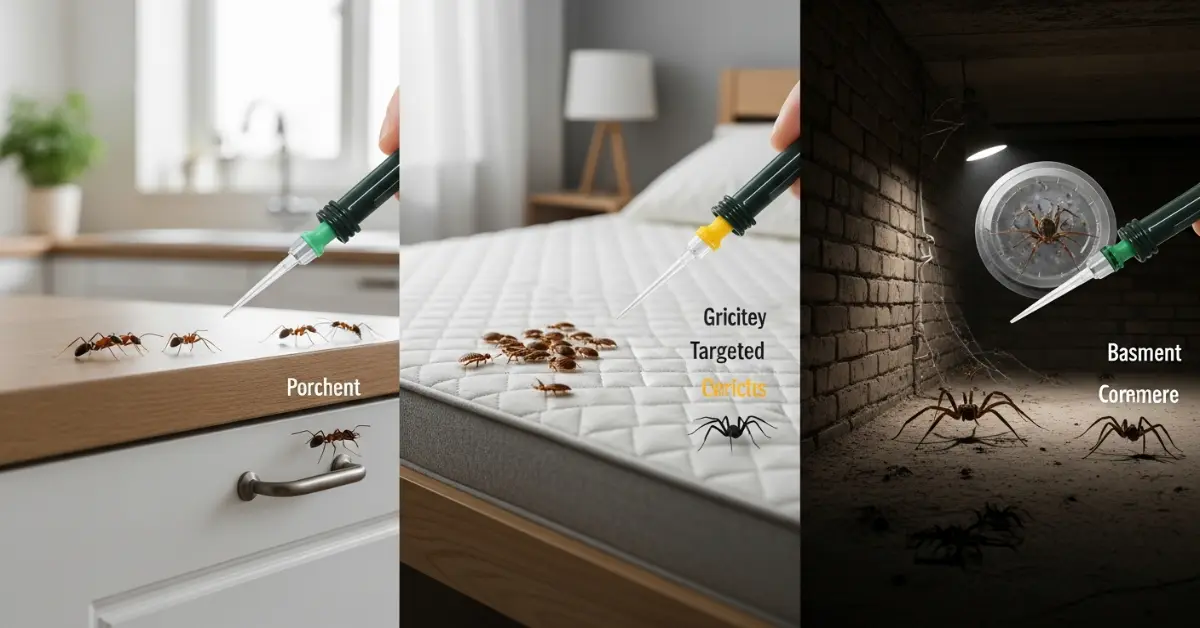
Precision crack-and-crevice treatment forms the foundation of effective indoor pest control services. Rather than broadcast spraying that contaminates living surfaces and drives pests deeper, professionals apply micro-encapsulated insecticides, dust formulations, and gel baits directly into harborage areas using precision equipment. For cockroaches, gel baits containing fipronil or indoxacarb are applied in tiny dots (0.1g) at 1-meter intervals inside cabinet voids, under appliances, behind wall plates, and in plumbing chases. These slow-acting toxins allow foragers to return to colonies and share through grooming and trophallaxis, achieving complete elimination including eggs and nymphs.
Bed bug treatment requires specialized indoor pest control services combining multiple methods. Steam application at 100°C penetrates mattress seams, box springs, and furniture joints where chemicals cannot reach, killing all life stages on contact. Precision chemical application using combination insecticides (pyrethrins, neonicotinoids, IGRs) targets cracks and crevices where bugs hide. Mattress encasement installation traps any surviving bugs inside, preventing bites and enabling detection. Interceptor traps placed under bed legs monitor for remaining activity and prevent reinfestation.
Rodent control inside homes utilizes tamper-resistant bait stations placed in inaccessible voids, mechanical snap traps in secured locations, and tracking powder that reveals travel patterns. Exclusion work seals interior entry points with steel wool, copper mesh, and silicone caulk. Unlike amateur trapping that catches only curious individuals, professional indoor pest control services systematically eliminate entire populations including breeding pairs.
Ant management combines interior gel baiting along trails and entry points with exterior perimeter barriers preventing new incursions. Sweet-based baits target sugar-feeding species, while protein-based formulations address grease ants. Professional-grade baits use superior attractants and delayed-action toxins that workers carry back to queens, achieving colony elimination rather than temporary forager reduction.
Family-Safe Indoor Treatment Protocols
Safety distinguishes professional indoor pest control services from dangerous amateur applications. Reputable providers use WHO-approved, low-toxicity formulations specifically selected for indoor environments with children, elderly, and pets. Micro-encapsulated insecticides minimize airborne particles and odors. Gel baits are placed in cracks and crevices inaccessible to non-target contact. Dust formulations remain contained within wall voids. IGRs (insect growth regulators) prevent pest reproduction without mammalian toxicity.
Service scheduling accommodates family routines, with technicians working during business hours while residents are away, or offering evening and weekend appointments. Pre-service preparation guidelines help families protect food, cover aquariums, and secure pets. Post-treatment safety intervals—typically 4-6 hours for most treatments, 12-24 hours for fumigation—ensure no chemical exposure before family re-entry. Reputable providers like SM Pest Control and Scorpion Services offer botanical and non-chemical alternatives for families with chemical sensitivities or infants.
Targeted application techniques minimize indoor chemical use. Precision crack-and-crevice treatment applies 90% less insecticide than broadcast spraying. Baiting systems concentrate active ingredients in inaccessible locations. Heat treatment for bed bugs eliminates pests without any chemical residues. These methods achieve superior results while maintaining family safety, distinguishing professional indoor pest control services from hazardous DIY approaches.
Seasonal Indoor Pest Pressures and Prevention
Bangladesh's distinct seasons create varying indoor pest pressures that indoor pest control services address through adaptive treatment protocols. Pre-monsoon (March-May) sees termite swarming and ant colony expansion, requiring foundation inspection and perimeter barriers. Monsoon season (June-September) drives rodents indoors seeking shelter from flooding, while cockroach and mosquito populations explode in humid conditions. Post-monsoon (October-November) brings stored product pests into pantries as agricultural harvests enter homes. Winter (December-February) concentrates rodents and bed bugs indoors as temperatures drop.
Professional indoor pest control services adjust quarterly treatments to these seasonal patterns. Spring services target emerging ants and termites; summer focuses on cockroaches, mosquitoes, and rodent exclusion; autumn addresses stored product pests and winter preparation; and winter services concentrate on rodent monitoring and bed bug inspection. This calendar-based approach ensures continuous protection adapting to changing indoor pest threats.
Preventive indoor pest control services include environmental modification consultations that reduce pest-conducive conditions year-round. Technicians recommend proper food storage in sealed containers, moisture control fixing leaks and improving ventilation, clutter reduction eliminating harborage, and sanitation protocols removing food debris that attracts pests. These cultural practices complement chemical treatments, providing sustainable indoor pest management.
Geographic Coverage and Regional Indoor Service Capabilities
Professional indoor pest control services have established comprehensive coverage across Bangladesh's major urban centers, with service intensity matching population density and housing types. Dhaka Division, encompassing the capital, Gazipur, Narayanganj, and Savar, contains the highest concentration of providers offering same-day emergency response for indoor pest crises. High-rise apartments in Gulshan, Banani, Baridhara, and Uttara require specialized vertical indoor pest management addressing shared plumbing and ventilation systems that facilitate pest movement between units.
Chittagong Division's coastal environment, with higher humidity and salt exposure, demands indoor pest control services utilizing moisture-resistant formulations and enhanced mold and mildew prevention alongside pest treatment. The port city's dense urban core requires rapid response capabilities for indoor cockroach and rodent emergencies.
Rajshahi and Khulna divisions have experienced rapid service expansion as urbanization accelerates. These regions emphasize cost-effective indoor pest solutions for emerging middle-class neighborhoods, with providers offering flexible payment plans and package deals. The drier climate reduces some indoor pest pressure but increases challenges from heat-tolerant species requiring adjusted treatment timing.
Sylhet and northeastern districts face unique indoor pest control services challenges due to heavy monsoon rainfall that drives outdoor pests indoors and compromises structural integrity. Service providers emphasize moisture control and structural repairs alongside pest treatment, addressing root causes of indoor infestations.
Rural indoor pest control services focus on traditional homes with unique construction challenges—mud walls, thatched roofs, and open eaves that facilitate pest entry. Mobile service units bring professional-grade indoor treatment to previously underserved areas, reducing reliance on ineffective traditional remedies and dangerous smoke fumigation.