
Preventive Rodent Control
Professional rodent prevention services in Bangladesh. Expert rat & mouse exclusion, proofing & control for homes & businesses.
Rodent prevention services Bangladesh
Rodent infestations have emerged as one of the most destructive and economically damaging pest threats facing Bangladeshi property owners, with rats and mice causing billions of taka in property damage, food contamination, and health risks annually. In the dense urban environments of Dhaka, Chittagong, and major cities—where over 21 million homes and businesses provide shelter, food, and water sources—professional rodent prevention services have become essential infrastructure for protecting public health, preserving property values, and maintaining business operations. Unlike reactive extermination that addresses visible symptoms, prevention-focused services stop infestations before they start through systematic exclusion, habitat modification, and proactive monitoring.
Rodent exclusion control Dhaka
The health implications of rodent activity extend far beyond mere nuisance. Rats and mice are documented vectors for over 35 diseases including leptospirosis, hantavirus, Salmonellosis, and rat-bite fever, spreading pathogens through contaminated food, droppings, urine, and bites. Their constant gnawing behavior damages electrical wiring (creating fire hazards), compromises structural integrity, destroys insulation, and contaminates food stores. For Bangladesh's food service industry, pharmaceutical manufacturers, and export-oriented businesses, rodent evidence during inspections triggers immediate regulatory action, contract cancellations, and reputational damage that can destroy carefully built enterprises.
Rodent prevention professional
Leading Bangladeshi providers including Pest Control Dhaka, SM Pest Control, Scorpion Services, and Active Force BD have developed sophisticated rodent prevention services combining professional exclusion techniques (sealing entry points with steel mesh, door sweeps, and caulk), strategic trapping and baiting programs, environmental modification consultations, and advanced monitoring systems. These services utilize WHO-approved rodenticides, tamper-resistant bait stations, and humane trapping methods that eliminate populations while preventing reinfestation. With pricing starting from just 3,000-6,000 BDT for residential prevention and 5,000-20,000 BDT for commercial programs, professional rodent prevention has become accessible to Bangladeshi families and businesses seeking to safeguard their health, property, and livelihoods against these persistent invaders.
The Science of Professional Rodent Prevention
Effective rodent prevention services operate on principles of Integrated Pest Management (IPM), emphasizing proactive exclusion over reactive extermination. The foundation of prevention lies in understanding rodent biology—specifically that mice can squeeze through openings as small as 6mm (dime-sized holes), while rats require only 12mm (quarter-sized gaps). Professional technicians conduct comprehensive property assessments identifying conducive conditions: vegetation touching building exteriors, unsealed utility penetrations, improper food storage, moisture accumulation, and structural gaps that provide entry highways.
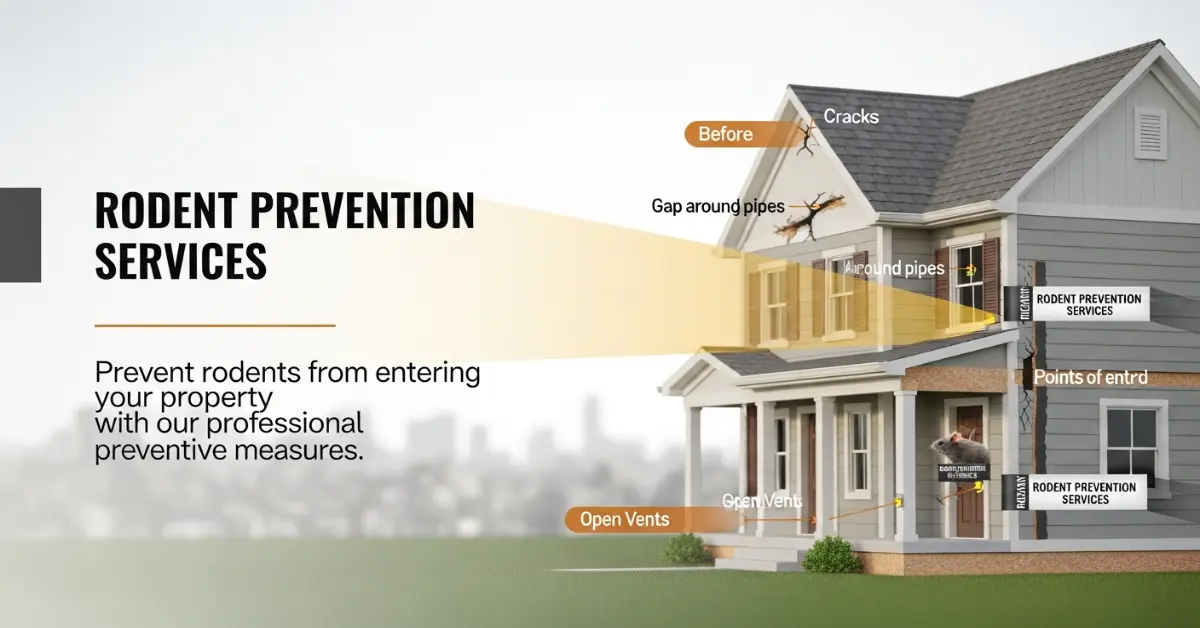
Exclusion techniques form the first line of defense in professional rodent prevention services. Technicians seal cracks and crevices around foundations, doors, windows, and utility openings using rodent-proof materials including copper mesh (Flexi Armour), steel wool, concrete, and specialized sealants that resist gnawing. Door sweeps and weatherstripping eliminate ground-level entry, while vent covers and chimney caps block aerial access. These physical modifications provide permanent protection that chemical treatments alone cannot match, particularly against the constant pressure of urban rodent populations seeking shelter and food.
Habitat modification complements exclusion by removing attractants that draw rodents to properties. Professional rodent prevention services provide detailed sanitation consultations: proper food storage in rodent-proof containers, immediate spill cleanup, garbage management with tight-fitting lids, clutter reduction eliminating nesting sites, and moisture control fixing leaks that provide water sources. Vegetation management including trimming tree branches away from rooflines and maintaining clear zones around foundations reduces exterior harborage and access bridges.
Why Reactive Rodent Control Fails and Prevention Succeeds
The limitations of reactive rodent control have become increasingly apparent as Bangladesh's urban density intensifies. Traditional extermination approaches—trapping visible rats or applying poison baits—address only symptomatic individuals while failing to seal entry points that allow continuous immigration from surrounding populations. A single female rat produces up to 60 offspring annually, meaning populations rebound within weeks of incomplete treatment. Worse, killing rodents without exclusion creates "dead zones" that attract new rodents seeking vacant territories, perpetuating infestation cycles.
Professional rodent prevention services eliminate this cycle by creating inhospitable environments that prevent initial entry and establishment. The economic mathematics overwhelmingly favor prevention: emergency rodent extermination for severe infestations costs 15,000-50,000 BDT including damage repairs, while annual prevention contracts averaging 5,000-15,000 BDT provide continuous protection. For commercial facilities, the cost of professional prevention represents minimal insurance against the catastrophic expenses of regulatory shutdowns, product recalls, electrical fires from chewed wiring, and lost business reputation.
For Bangladesh's food processing industry, pharmaceutical manufacturers, and export-oriented garment factories, rodent prevention services provide compliance documentation essential for international standards. HACCP, BRC, and ISO 22000 certifications mandate documented pest prevention programs with detailed monitoring records. Failed audits due to rodent activity result in immediate contract cancellations with international buyers who maintain zero-tolerance policies. Professional services provide the systematic documentation, service warranties, and audit-ready reporting that protects business continuity while ensuring physical exclusion of pests.
How to Order
Follow these simple steps to book your service quickly and easily.
Select Service
From the category, select the service you are looking for.
Book Your Schedule
Select your convenient time slot that fits your availability.
Place Order
Confirm your order by clicking “Place Order”.
Comprehensive Rodent Prevention Service Components
Professional rodent prevention services in Bangladesh deliver multi-layered protection programs tailored to property type, rodent pressure, and client requirements. The process initiates with thorough inspection using specialized equipment to identify active infestations, entry points, harborage areas, and conducive conditions. Technicians distinguish between Norway rats (burrowing, basement-dwelling), roof rats (climbing, attic-infesting), and house mice (small, ubiquitous), adjusting prevention strategies accordingly. Detailed reports document findings with photographs, site maps, and prioritized recommendations.
Exclusion work represents the most labor-intensive and critical component of rodent prevention services. For residential properties, this includes installing door sweeps on all exterior doors, sealing gaps around plumbing and electrical penetrations with copper mesh and caulk, repairing damaged vent screens, installing chimney caps, and applying concrete or metal barriers to foundation cracks. Commercial facilities require additional measures: loading dock seals, air curtains, rodent-proof fencing, and specialized door systems for high-traffic areas. Leading providers like Pest Control Dhaka and SM Pest Control guarantee exclusion work for 12 months, returning to address any seal failures at no additional cost.
Trapping and baiting programs provide immediate population suppression while exclusion measures take effect. Professional rodent prevention services utilize tamper-resistant bait stations containing slow-acting rodenticides (bromadiolone, difenacoum) that prevent bait shyness and ensure complete colony elimination. Strategic trap placement along rodent runways, in voids, and near entry points maximizes capture efficiency. Technicians employ multiple trap types—snap traps, glue boards, and live traps—selected based on location sensitivity and client preferences. For humane concerns, live trapping and relocation programs are available, though exclusion remains the most effective long-term solution.
Monitoring systems complete comprehensive rodent prevention services, providing early warning of new activity before populations establish. Electronic monitoring devices with sensors detect rodent movement in real-time, transmitting alerts to service providers for immediate response. Traditional monitoring includes regular inspection of bait stations, glue boards, and exclusion barriers to identify maintenance needs or new vulnerabilities. This proactive approach ensures that minor issues receive immediate attention before escalating to severe infestations requiring expensive remediation.
Sector-Specific Rodent Prevention Applications
Different property types in Bangladesh demand customized rodent prevention services approaches balancing efficacy with operational requirements. Residential services prioritize family and pet safety, utilizing enclosed bait stations, snap traps in secured locations, and exclusion materials that don't compromise home aesthetics. Treatments accommodate household schedules, with technicians working during business hours while residents are away, and utilizing low-toxicity formulations that minimize risk to children and pets. Annual residential prevention contracts typically include quarterly inspections, trap maintenance, and exclusion reinforcement, with costs ranging 3,000-10,000 BDT annually depending on home size and rodent pressure.
Food service and restaurant rodent prevention services operate under the strictest regulatory requirements with zero-tolerance policies. These programs emphasize non-chemical interventions—exclusion, sanitation, and monitoring—supplemented by limited, targeted baiting in non-food areas using tamper-resistant stations. Service scheduling accommodates operational hours, with treatments during closing periods and mandatory pre-opening inspections to ensure no contamination risks. Providers maintain detailed service logs including bait station locations, inspection dates, and corrective actions for health department review. The investment in professional prevention (15,000-35,000 BDT annually for mid-size restaurants) represents essential protection against the catastrophic costs of health department closures and reputational damage.
Healthcare facilities including hospitals, clinics, and pharmaceutical manufacturing plants require the most conservative rodent prevention services approaches. These environments demand pre-approved product lists, application only in unoccupied areas, and extensive documentation for Joint Commission or WHO compliance. Integrated Pest Management (IPM) programs emphasize physical exclusion, electronic monitoring, and trapping rather than chemical dependence. Service frequencies increase to monthly or bi-weekly to ensure immediate detection of any activity that could compromise sterile environments or medication safety. Specialized training for healthcare technicians includes infection control protocols and patient safety awareness distinct from standard commercial service requirements.
Industrial and warehouse rodent prevention services address large-scale facilities with unique challenges including shipping docks, extensive storage racking, and multiple buildings. Treatment focuses on perimeter barrier applications, exterior baiting stations, dock door seals, and monitoring systems that detect incursions before population establishment. For export-oriented RMG factories and food processing plants, providers ensure all treatments comply with international pesticide residue regulations, providing certificates required for customs clearance and buyer audits. These comprehensive programs cost 10,000-50,000 BDT annually for large facilities but protect millions in inventory and export contracts.
Geographic Coverage and Regional Service Capabilities
Professional rodent prevention services have established comprehensive coverage across Bangladesh's major urban and commercial centers, with service intensity matching population density and rodent pressure. Dhaka Division, encompassing the capital, Gazipur industrial belt, Narayanganj, and Savar, contains the highest concentration of providers offering same-day emergency response. High-rise residential and commercial towers in Gulshan, Banani, Baridhara, and Uttara require specialized vertical prevention strategies addressing shared infrastructure that facilitates rodent movement between floors and units.
Chittagong Division's coastal environment, with port facilities and extensive warehousing, demands rodent prevention services utilizing heavy-duty exclusion materials resistant to salt corrosion and enhanced programs for shipping and receiving areas. The prevalence of Norway rats in port sewers and drainage systems necessitates specialized exterior baiting and monitoring distinct from interior-focused house mouse management used in residential areas. EPZ facilities require security-cleared technicians familiar with customs regulations and international shipping standards.
Rajshahi and Khulna divisions have experienced rapid rodent prevention services growth as urbanization accelerates and agricultural processing expands. These services emphasize stored product protection for grain warehouses and food processing facilities, with prevention programs designed to prevent contamination of commodities destined for domestic consumption and export. The drier climate reduces some rodent pressure but increases challenges from field mice and rats requiring agricultural area management alongside urban programs.
Sylhet and northeastern districts face unique rodent prevention services challenges due to heavy monsoon rainfall that compromises exclusion barriers and drives outdoor rodent populations into structures. Service providers emphasize structural modifications—improving drainage, elevating foundations, installing physical barriers—that provide protection independent of weather conditions. The region's growing tourism industry supporting religious pilgrimage has increased demand for discrete, effective rodent management in hotels, guesthouses, and hospitality facilities.
Rural rodent prevention services focus on agricultural protection, preventing field rodent damage to crops and stored harvests. These programs integrate with rural development initiatives, utilizing cost-effective barrier treatments and community education to reduce reliance on dangerous traditional poisons. The expansion of contract farming and export-oriented agriculture has increased demand for professional prevention meeting international phytosanitary standards, with mobile service units bringing expertise to previously underserved areas.